
Jakarta presses exporters on geolocation data as EUDR start date of 30 December 2026 nears
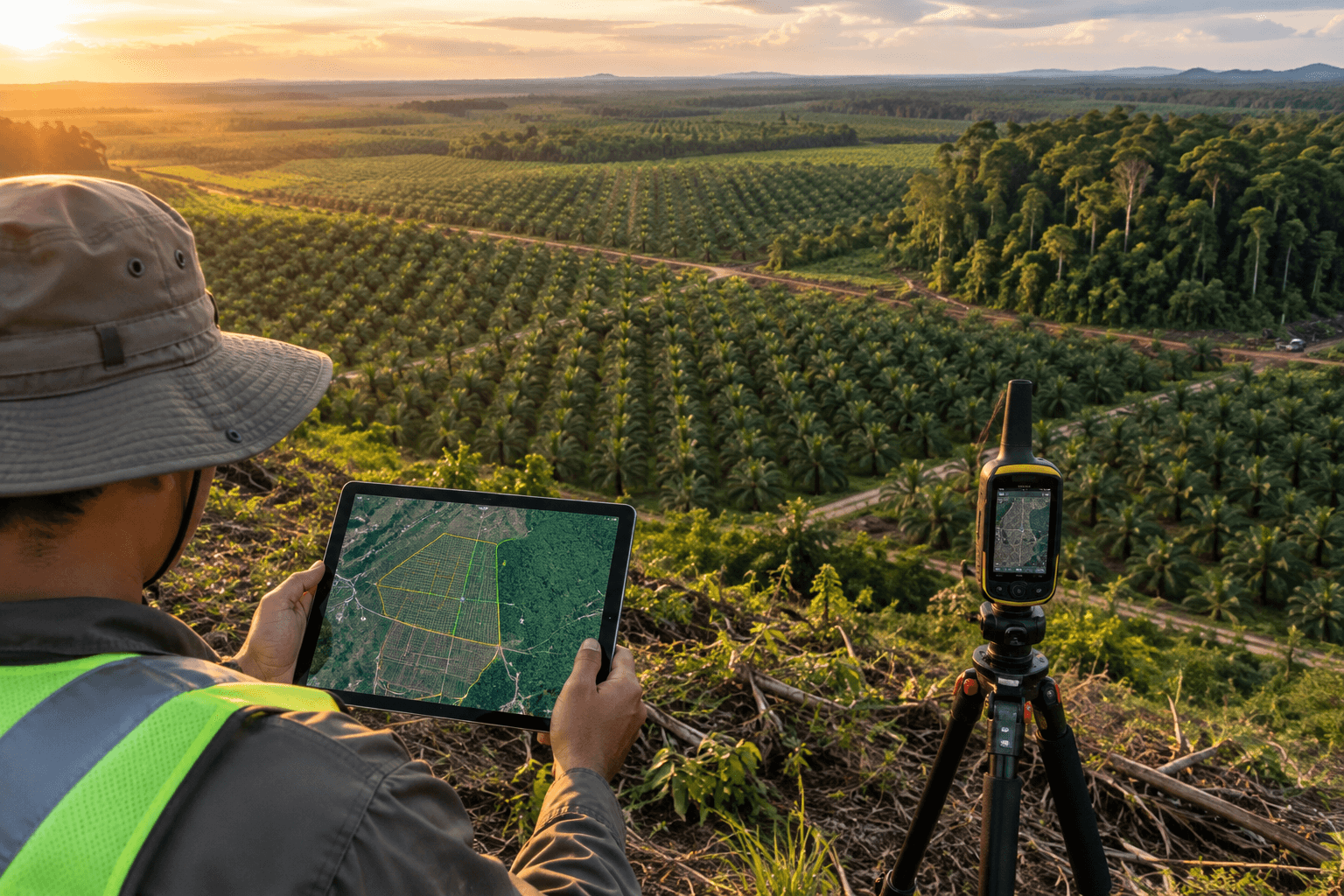
Deputy Coordinating Minister for Economic Affairs Dradjad Hari Wibowo urged exporters to compile the necessary geolocation data promptly ahead of the EU Deforestation Regulation (EUDR), Regulation (EU) 2023/1115, which applies from 30 December 2026. He was speaking at a press conference at his office in Jakarta on Wednesday 18 November 2026.
Dradjad stressed that covered commodities must be proven deforestation-free and supported by precise mapping data to maintain access to the European market. He said that Indonesia does not export meat or soybeans, so it will be affected through palm oil (CPO), coffee, cocoa, timber and rubber.
He estimated Indonesia’s exports of EUDR-covered commodities at about US$7 billion, a figure he said came from data he had seen earlier. He said he had not yet obtained the latest data.
The EUDR requires that products placed on the EU market be deforestation-free, legally produced and backed by a due diligence statement. Its application has been postponed twice from the original date of 30 December 2024. The first postponement moved it to December 2025, and the second to 30 December 2026, through Regulation (EU) 2025/2650 of 19 December 2025. The postponements were intended to give business operators time to prepare and to refine the administrative system.
The government, through the Geospatial Information Agency (BIG), has developed a support system to facilitate geolocation data collection and compliance.
Analysis
The minister’s remarks put the exporting government’s voice behind the 30 December 2026 date, for rules whose start has already moved twice. For buyers of palm derivatives in personal and home care, this suggests that supplier discussions on geolocation data may need to move from planning to evidence. The decision most directly affected is sourcing: which suppliers can document origin, and how soon.
Palm oil is the first commodity the minister named. This may mean that oleochemical and surfactant buyers further downstream face questions about how far their suppliers can trace feedstock. The remarks do not say which palm derivatives or product codes are covered, so the scope of any specific ingredient cannot be read from them.
The BIG support system may ease the burden on producers, but its practical reach has not been described. Nor is it clear how many producers can already supply the data. The minister’s own caveat on the export figure suggests that even the size of the exposure is not settled.
Readers should watch whether exporters complete their geolocation data before 30 December 2026, whether the BIG system’s coverage is published, and whether the date holds after two earlier postponements.