
Savor Adds Helios AI Climate Forecasts as El Niño Raises 2027 Palm Supply Questions
US carbon-to-fat company Savor has become a customer of Helios AI, a platform that forecasts climate, price and supply disruption for the agri-food sector. Savor will use the platform's data to measure climate risk in conventional fat and oil supply chains. It will also help its food manufacturing partners build that evidence into their resilience planning.
According to Helios AI data, crude palm oil has climbed 54% since 2023, and palm kernel oil, the lauric fat used in coatings and fillings, has more than doubled. Cocoa rose from about $2,100 per metric ton in mid-2022 to almost $13,000 by the end of 2024, and has since fallen roughly 50% from its peak. Palm prices have steadied, though the companies say the climate exposure behind the spike remains. Two countries account for around 87% of traded palm oil.
The partners point to a strong El Niño forecast to peak between November 2026 and January 2027. Oil palm and cocoa are tree crops whose output lags the weather by close to a year, so the effects are expected in the 2027 harvest. Helios AI says its drought signal for Indonesian palm has jumped about tenfold from this crop year to next, and its models show no return to pre-2022 prices within their forecast horizon.
A pilot-scale alternative
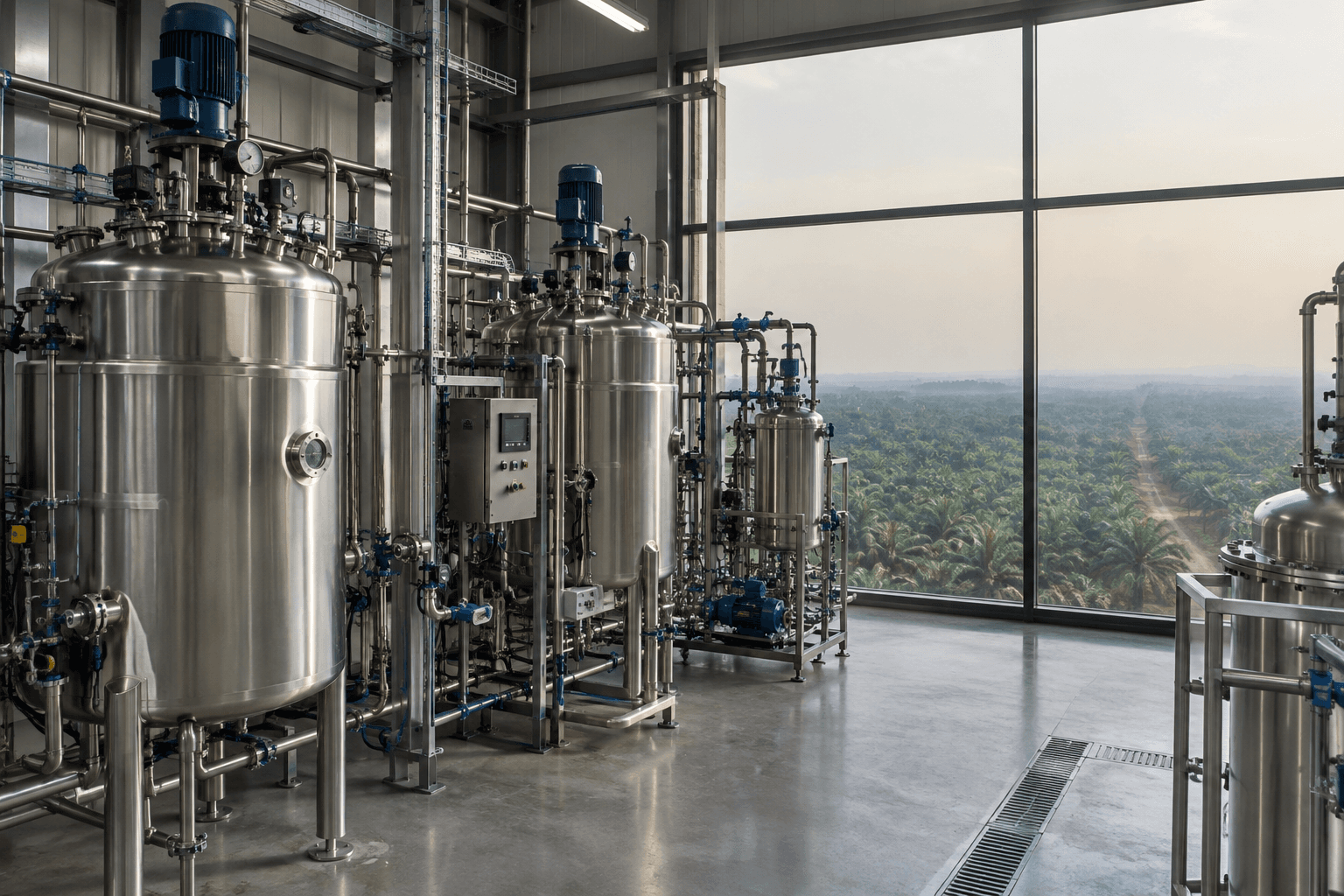
Savor produces fats and oils from captured carbon dioxide, green hydrogen and methane without agricultural feedstocks. The company says this means its supply is not linked to any single growing region. Founded in 2022 by Kathleen Alexander and Ian McKay, it runs research facilities in San Jose, California, and a pilot production plant in Batavia, Illinois.
In July, Swedish oils and fats group AAK took an equity stake in Savor as part of a two-year agreement to co-develop specialty fats for dairy alternatives and bakery. An independent life cycle assessment published in August found that Savor's fats can reduce greenhouse gas emissions by up to 98% compared with conventional fats, depending on the fat being replaced and the carbon source used.
"Helios AI gives food companies an early, specific read on that exposure and our job is to give them a supply that isn't exposed to it in the first place," Alexander, Savor's CEO, said in the announcement. The two companies plan to share further results through a webinar and a follow-up case study.
Feedstock risk, not a product launch
The stated applications are food, so the direct relevance to personal and home care is limited. The link is the shared feedstock. Buyers of palm and palm kernel derivatives face the same concentrated supply and the same weather exposure that the forecast describes. This suggests the development is most useful to procurement teams as a framework for quantifying sourcing risk, rather than as a ready substitute.
Scale matters here. Savor's production is at pilot scale, and the AAK agreement is a two-year co-development arrangement. Nothing in the announcement indicates commercial availability. Buyers weighing a move of volume to a cost-based supply would still need evidence on volumes, specifications and pricing that has not been disclosed.
The evidence base also deserves a careful read. The forecasts come from Helios AI's own models, and the partners share a commercial interest in the exposure being taken seriously. The emissions figure comes from an independent assessment but is a range with an upper bound, dependent on the fat replaced and the carbon source. Formulators and sustainability leads may want the underlying assessment before relying on it in claims.
It will be worth watching whether the planned webinar and case study contain customer-level exposure data, and whether the specialty fats developed with AAK reach a scale that moves them beyond co-development. For investors, the question is whether a forecasting partnership converts into offtake. For now, the decision it informs is how much 2027 palm exposure to hedge, not which molecule to specify.